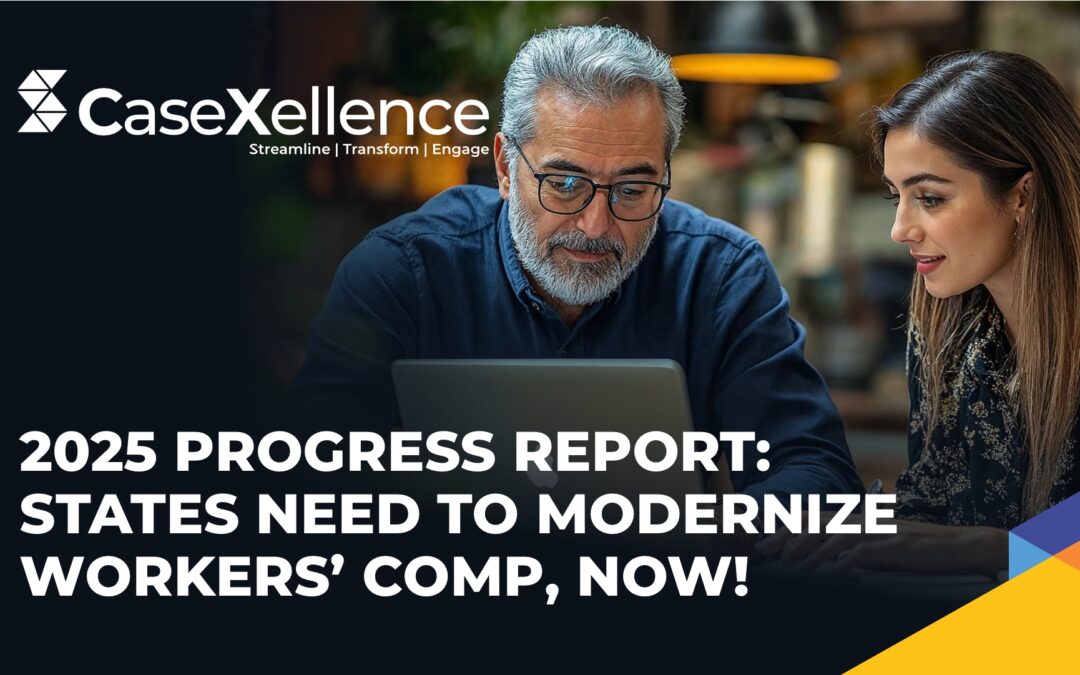
State agencies across the United States are confronting a growing challenge: delivering efficient and equitable Government Workers’ Compensation Services amid rising injury rates, outdated technology, and mounting public expectations. According to the U.S. Bureau of Labor Statistics (BLS), private-sector employers reported 2.8 million nonfatal workplace injuries and illnesses in 2022, an increase from the previous year (Bureau of Labor Statistics, 2023). More claims mean higher administrative pressure, but most state systems still rely on aging, siloed infrastructure.
This is where CaseXellence, an intelligent low-code case management platform built exclusively for public-sector regulators, plays a critical role. Designed for modern regulatory workflows, CaseXellence enables states to streamline, transform, and engage across the entire workers’ compensation lifecycle, from intake to adjudication to provider coordination.
Table of Contents
Legacy Systems Are Delaying Fair and Faster Claims Processing
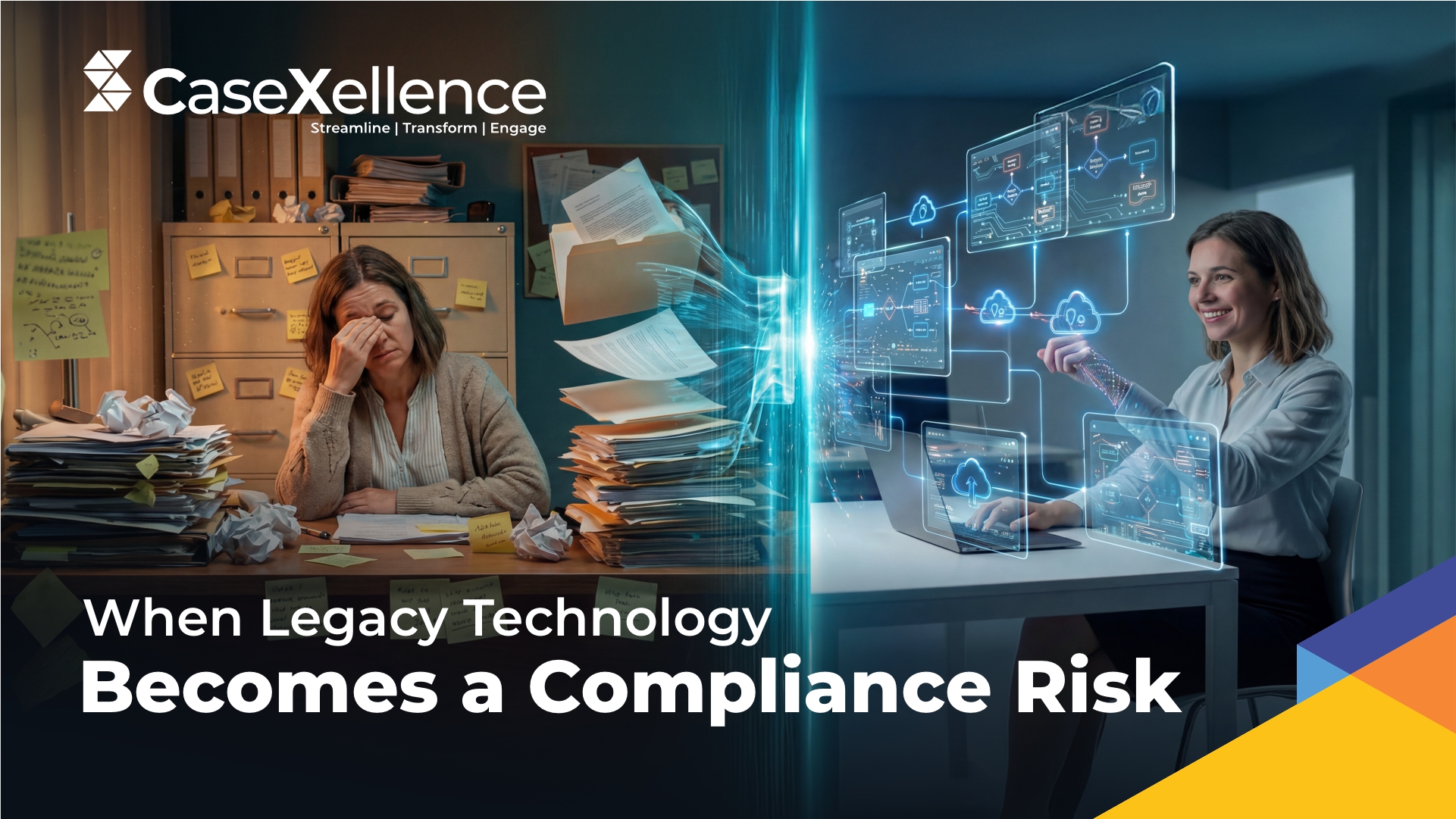
Many states still operate on legacy government case management systems built 20–30 years ago. These systems limit automation, delay medical review cycles, strain adjuster workloads, and restrict digital access for injured workers and employers.
The Government Accountability Office (GAO) has repeatedly found that outdated government systems increase the risk of delayed benefit processing, cybersecurity vulnerabilities, and higher operational costs across public programs (GAO, 2025). Workers’ compensation systems experience the same bottlenecks when they rely on inflexible, nonintegrated technology.
The impact is real:
- Injured workers wait longer for decisions.
- Medical documentation is fragmented.
- Fraud detection becomes reactive rather than predictive.
- Administrative tasks overshadow case investigation.
With workplace injury rates rising and case complexity increasing, state governments must modernize to maintain service quality.
Why 2025 Is a Turning Point for State Workers’ Compensation Programs
Public-sector modernization is accelerating nationwide. The U.S. Department of Labor (DOL) has emphasized improving equity, accessibility, and timeliness across worker benefit programs, including compensation programs governed by state agencies (U.S. Department of Labor, 2024). Meanwhile, the National Institute for Occupational Safety and Health (NIOSH) continues to highlight the evolving nature of workplace injuries, recommending better digital reporting, data sharing, and coordinated case review to improve safety outcomes (NIOSH, 2023).
In 2025, three forces are pushing state agencies to modernize:
1. Increased Claim Volume & Complexity
Aging workforces, behavioral health cases, and new types of injuries create more nuanced case journeys.
2. Demand for Real-Time Decision Support
Fraud, medical misreporting, and compliance challenges require analytics-driven oversight.
3. Citizen Expectations for Digital Access
Workers expect mobile portals, digital filing, and transparent claim tracking, something legacy Government Workers’ Compensation Systems rarely provide.
How CaseXellence Supports State Agencies in 2025
CaseXellence’s Workers’ Compensation module goes beyond automation, it was engineered for public-sector regulators to ensure compliance, transparency, and adaptability.
A Unified, Intelligent Platform for State Regulators
CaseXellence serves as a modern Gov Workers’ Compensation Platform, integrating intake, investigation, provider communication, adjudication workflows, and decision documentation into a single environment.
AI-Enabled Insights to Support Fair Outcomes
With advanced analytics and automated rule checks, CaseXellence supports early fraud detection, medical variance identification, and consistent adjudication, aligning with best practices cited by DOL and GAO.
Citizen-Focused Digital Access
Self-service portals reduce phone traffic and enhance the injured worker and employer experience, a modernization priority across state workforce agencies.
Built for Government Oversight & Accountability
As a purpose-built Workers’ Compensation Management Platform, CaseXellence supports multi-agency collaboration, regulatory audits, and structured reporting without compromising security or compliance.
And because CaseXellence is explicitly designed as a gov case management solution, agencies avoid the inefficiencies of retrofitting commercial claims systems not intended for public regulatory use.
A Modernized Future for Government Workers’ Compensation Services
State governments in 2025 cannot afford to rely on slow, outdated, and nonintegrated systems. Modernizing workers’ compensation operations is not simply a technology upgrade, it is a public obligation to injured workers, employers, and taxpayers.
CaseXellence enables state agencies to streamline, transform, and engage with modern regulatory workflows powered by automation, analytics, and secure digital access.
For agencies ready to modernize their Government Workers’ Compensation Services, CaseXellence is engineered to deliver measurable improvements from day one.
Read More About Speridian’s Government Workers’ Compensation Management Platform
- How Case Tracking and Monitoring Solutions Enhance Government Workers’ Compensation Services?
- How AI and Automation Are Transforming Government Workers’ Compensation Platforms
- Automated Workers’ Compensation Platform for Public Sector
- How to Transform Workers Compensation with Unmatched Flexibility
- Key Advantages of a Tailored Approach in Government Workers’ Compensation Systems